Thai Street Food
Traditional Thai Food - Popular Dishes to Try
By Lexi From Thailand · 5 min read
Traditional Thai food is diverse and continually practiced, not a fixed list of famous restaurant dishes. Use these examples as an introduction rather than a complete map.
Look beyond a single national menu
Thailand's food traditions reflect geography, agriculture, trade, migration, and the choices of individual households. Broad regional labels can orient a newcomer, but they are not strict borders separating ingredients or techniques. A dish may travel, change, and acquire local variations while remaining meaningful to the people who cook it. Asking where and how a dish is eaten often teaches more than arguing that only one ingredient list deserves the word traditional.
Understand rice and shared meals
Rice is central to many meals, but the type and manner of serving vary. Jasmine rice is familiar across many settings, while glutinous rice is particularly associated with northern and northeastern foodways. Sticky rice is usually steamed after soaking and has a texture suited to different eating habits from fluffy jasmine rice. Neither is simply a more authentic substitute for the other. Match rice to the dish and context when learning.
Think in combinations
A shared meal may bring together soup, a curry, vegetables, a relish, and other dishes with contrasting flavors. It does not require every item to be fiercely spicy or heavily seasoned. Mild dishes can offer relief beside sharper ones. At home, beginners can learn the same principle through one main dish, rice, and a fresh or gently cooked side instead of attempting an elaborate spread.
Explore curries and soups with context
Green curry is one well-known coconut-based example, but Thai curry is not synonymous with coconut milk. Sour curries and other water-based preparations show a different structure. Northern khao soi is associated with a curry-like coconut broth and noodles, with multiple local versions and a history of cultural exchange. Southern dishes can highlight pronounced chili and turmeric flavors, although reducing a whole region to heat alone misses its diversity.
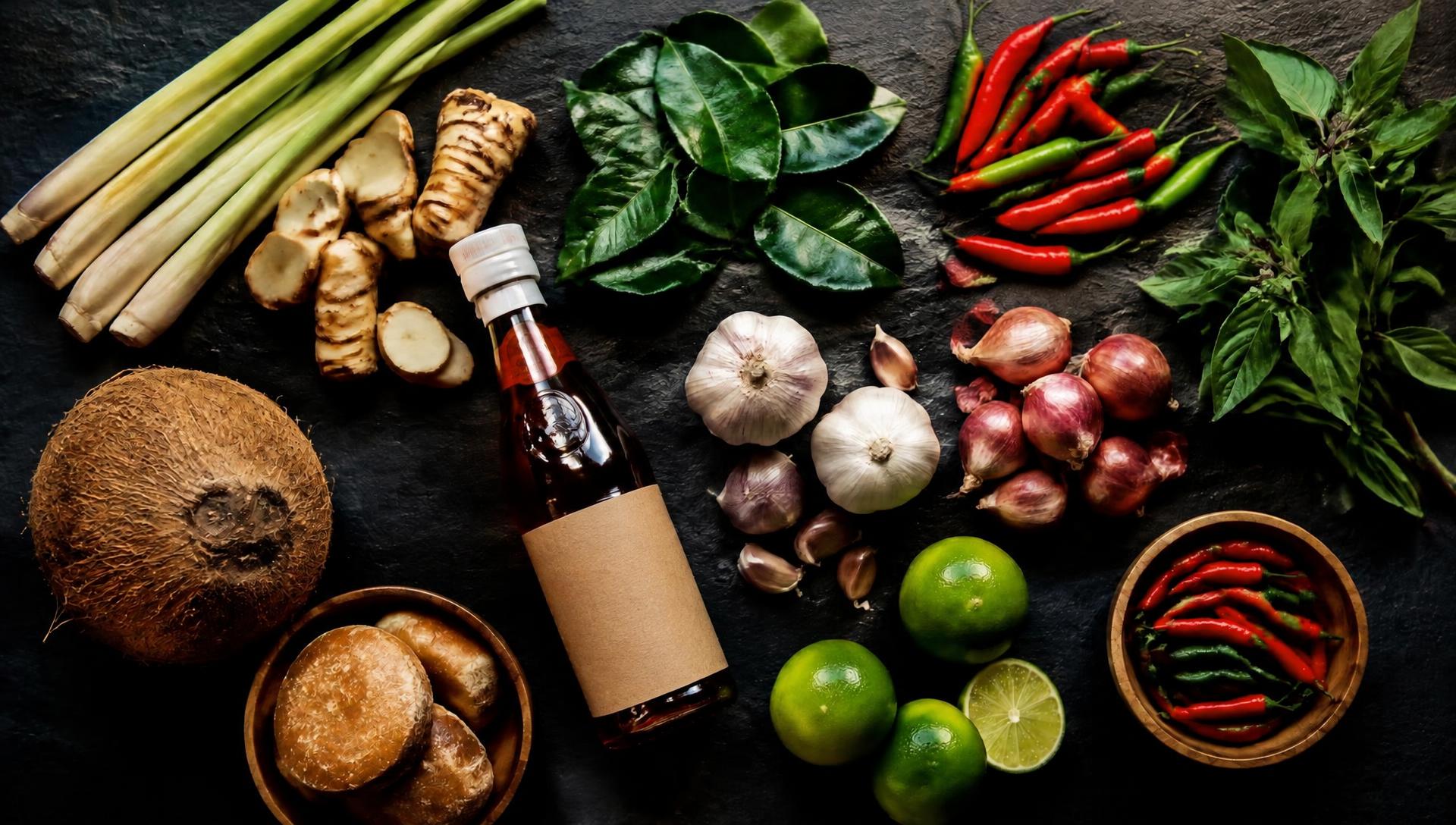
Tom yum is known for an aromatic hot-sour profile, commonly involving lemongrass, galangal, and makrut lime leaves. Versions differ in protein and broth style. Tom kha uses coconut milk and prominently features galangal. These soups share some ingredients without being interchangeable. When cooking them, distinguish between tender ingredients meant to be eaten and tough aromatic pieces used mainly to flavor the liquid.
Try salads, stir-fries, and street foods
Som tam uses a pounding and mixing technique to bring together a strongly flavored dressing and crisp ingredients, often green papaya. Northeastern and central styles can differ, and fermented fish products or salted seafood may appear in some versions. Larb is another family of dishes with regional distinctions, not simply any meat mixed with lime. Northeastern versions often feature toasted rice powder, while northern preparations can have very different seasonings and methods.
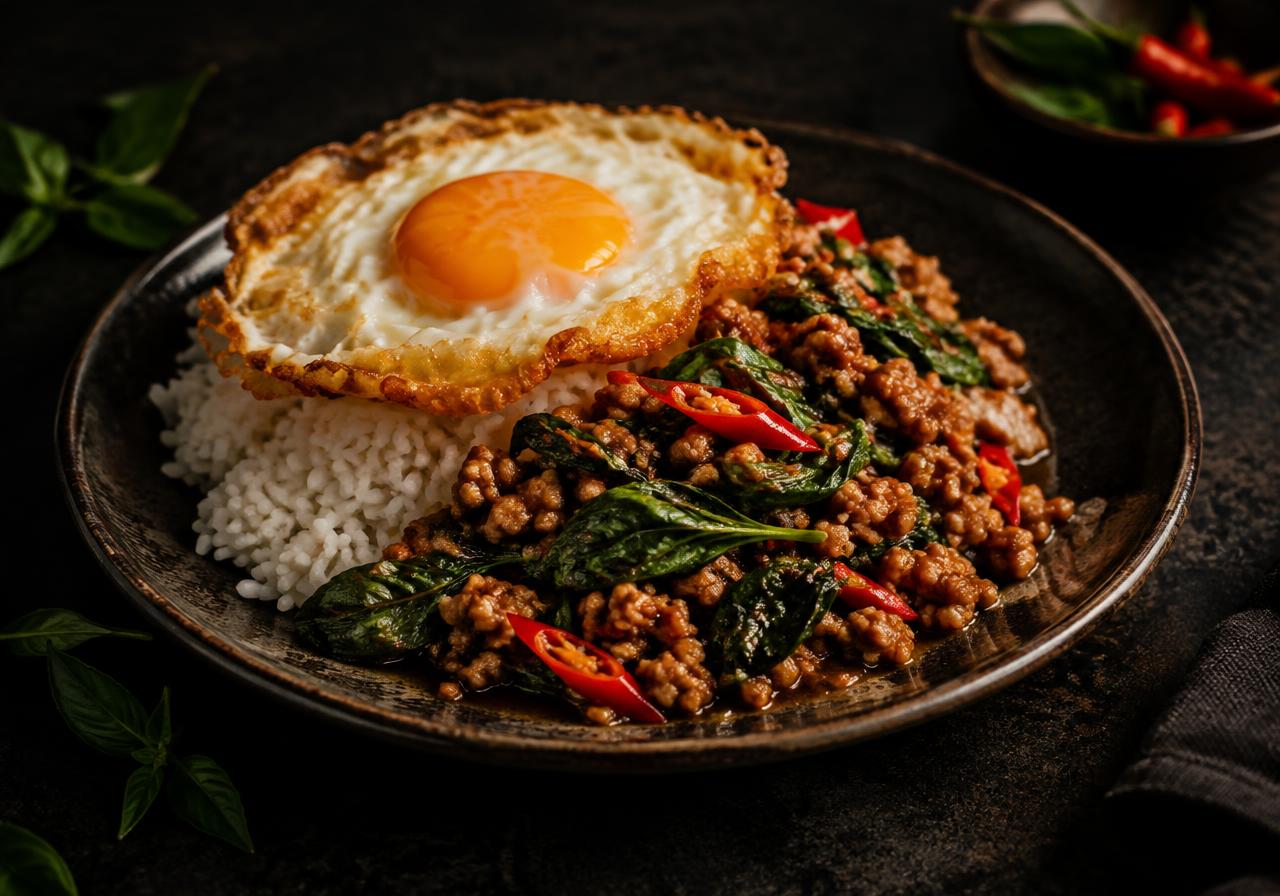
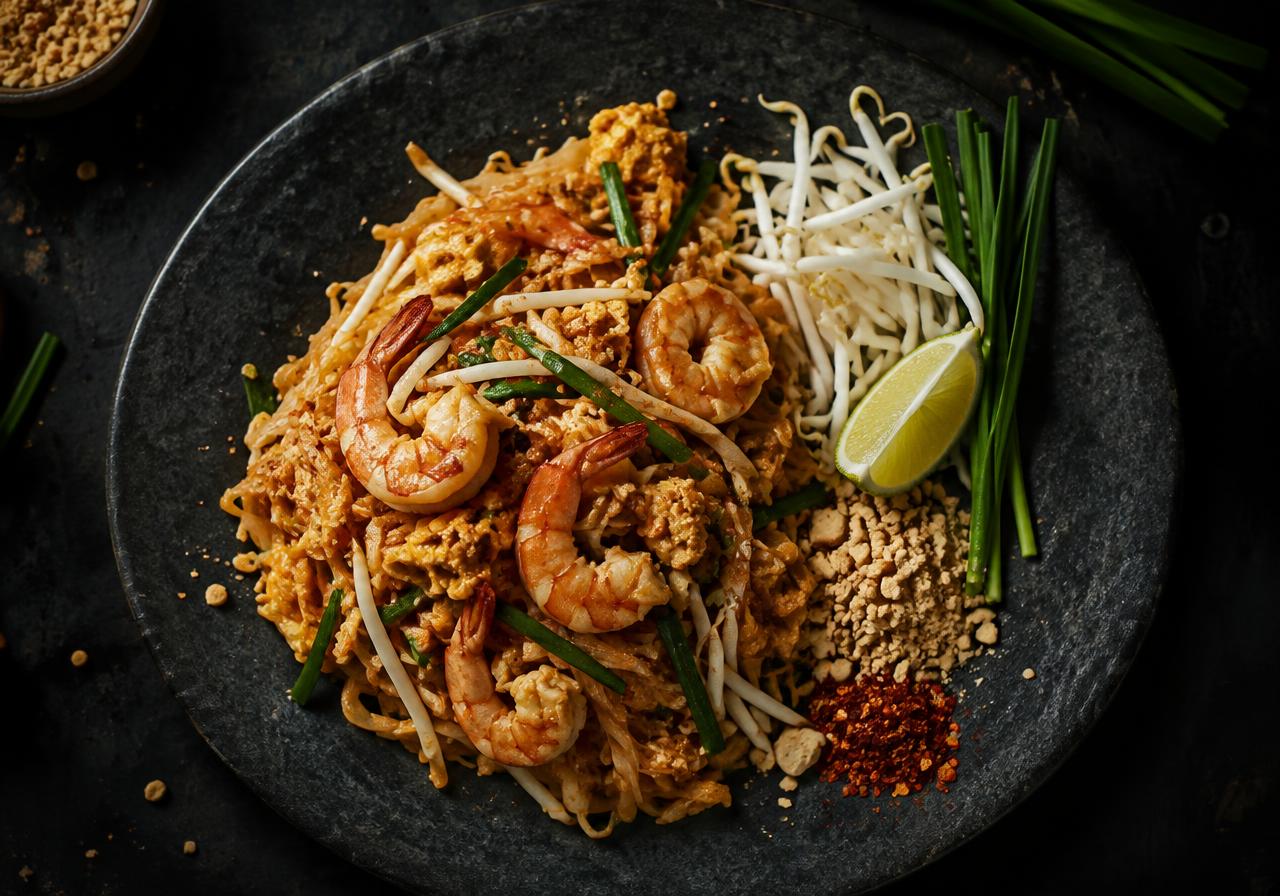
Pad kra pao demonstrates the aroma of holy basil in a quick stir-fry. Pad thai shows another technique, combining rice noodles and tamarind-based seasoning with varied garnishes. Grilled skewers, noodle soups, and rice dishes also belong in a discussion of street food. Street food describes a setting and mode of selling, not one uniform flavor or a guarantee that every dish is quick for a beginner to reproduce.
Finish with curiosity and good questions
Mango sticky rice is a familiar entry into Thai desserts, combining ripe fruit with coconut-dressed glutinous rice. Other sweets explore different rice textures, coconut, palm sugar, beans, and local ingredients. Seasonal availability matters, and the dessert selection in one place or season will not represent everything eaten across the country. Try learning the name of a dish and the technique behind it, rather than only collecting photographs of famous plates.
Tip: When following a recipe, note the cook's regional or family context if they provide it. Preserve that context when describing your own adaptation instead of presenting it as the definitive version.
Substitutions can be practical without being invisible. Be clear when replacing holy basil, galangal, or a fermented condiment, and check labels for allergens. Exploring traditional food is most rewarding when respect, curiosity, and honest description matter more than claiming perfection after one attempt.
Start with a practical beginner guide. →
Explore more Thai food traditions. →
Continue your Thai cooking journey
For another way to explore home cooking, consider Thai Kitchen Essentials: 27 Recipes from Lexy's Family Table by Lexi From Thailand. This digital cookbook is an option for readers who prefer a collected resource alongside individual blog articles. Review the available description and format information to decide whether it suits your kitchen and the way you like to learn.