The flavor balance at the heart of Thai food
Thai dishes aim for balance between salty (fish sauce), sweet (palm sugar), sour (lime, tamarind), spicy (chilies) and often savory or bitter notes from herbs. A dish rarely features just one of these. Learning to taste and adjust is the most important beginner skill.
Essential Thai ingredients
Aromatics
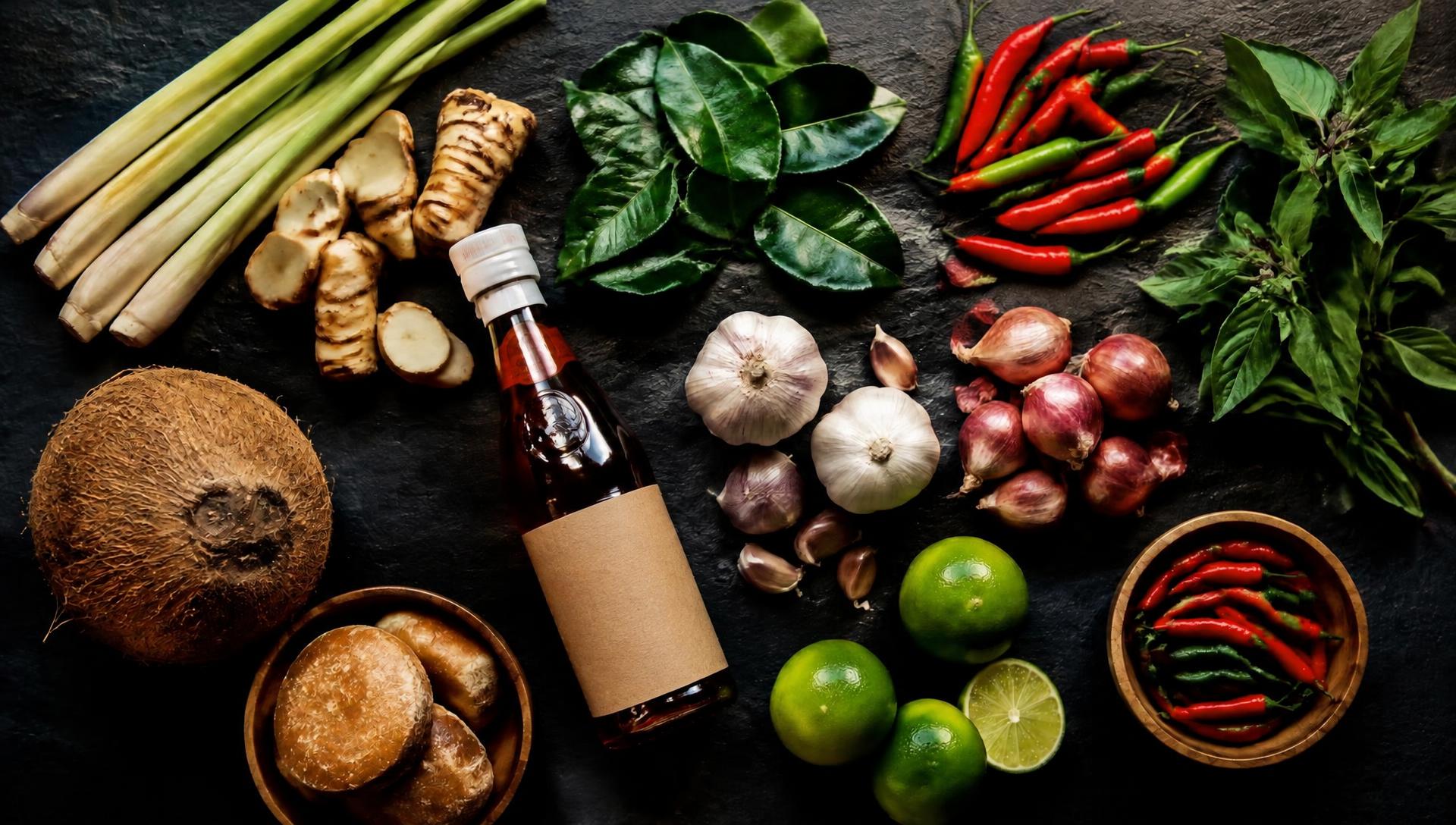
Garlic, shallots, lemongrass, galangal and kaffir lime leaves form the base of many dishes.
Herbs
Thai basil, holy basil and cilantro are added fresh for aroma.
Chilies
Bird's eye chilies are hot. Start with fewer and add more to taste.
Coconut milk and curry paste
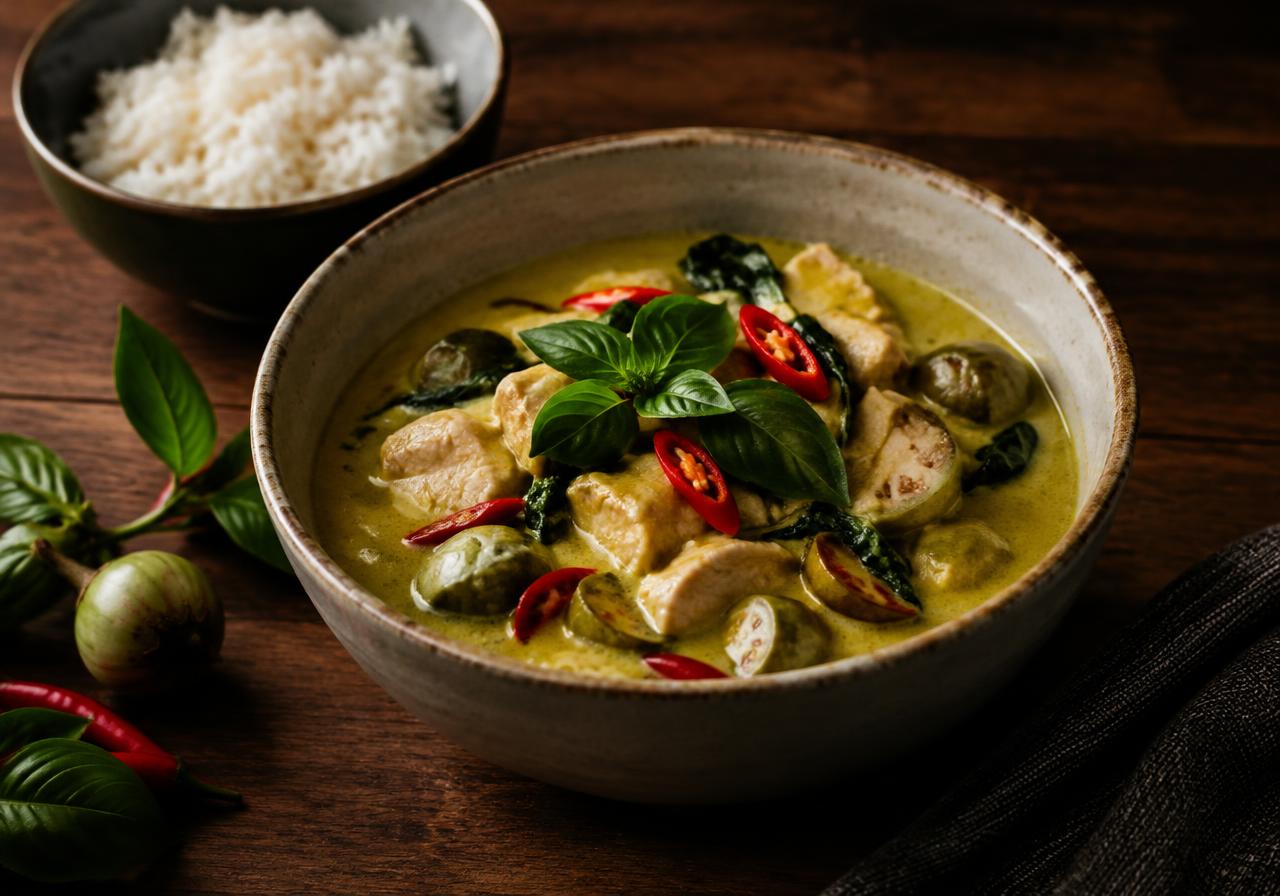
The foundation of Thai curries. Good store-bought pastes are a fine starting point.
Equipment you need
You don't need a specialist kitchen. A wok or large skillet, a sharp knife, a cutting board, a saucepan and a rice cooker or pot will cover most recipes. A mortar and pestle is useful for pastes and salads, but optional when you're starting out.
Core techniques
Stir-frying
Prep everything first, heat the pan until very hot, and keep ingredients moving.
Simmering curries
Fry curry paste in a little coconut cream until fragrant before adding liquid.
Cooking jasmine rice
Rinse rice until the water runs mostly clear, then cook with about 1¼ cups water per cup of rice.
Food safety basics
Cook chicken to an internal temperature of 165°F (74°C), keep raw meat and seafood separate from ready-to-eat ingredients, and refrigerate cooked rice within an hour or two of cooking.