Thai Noodle Recipes
How to Make Authentic Pad Thai at Home
By Lexi From Thailand · 5 min read
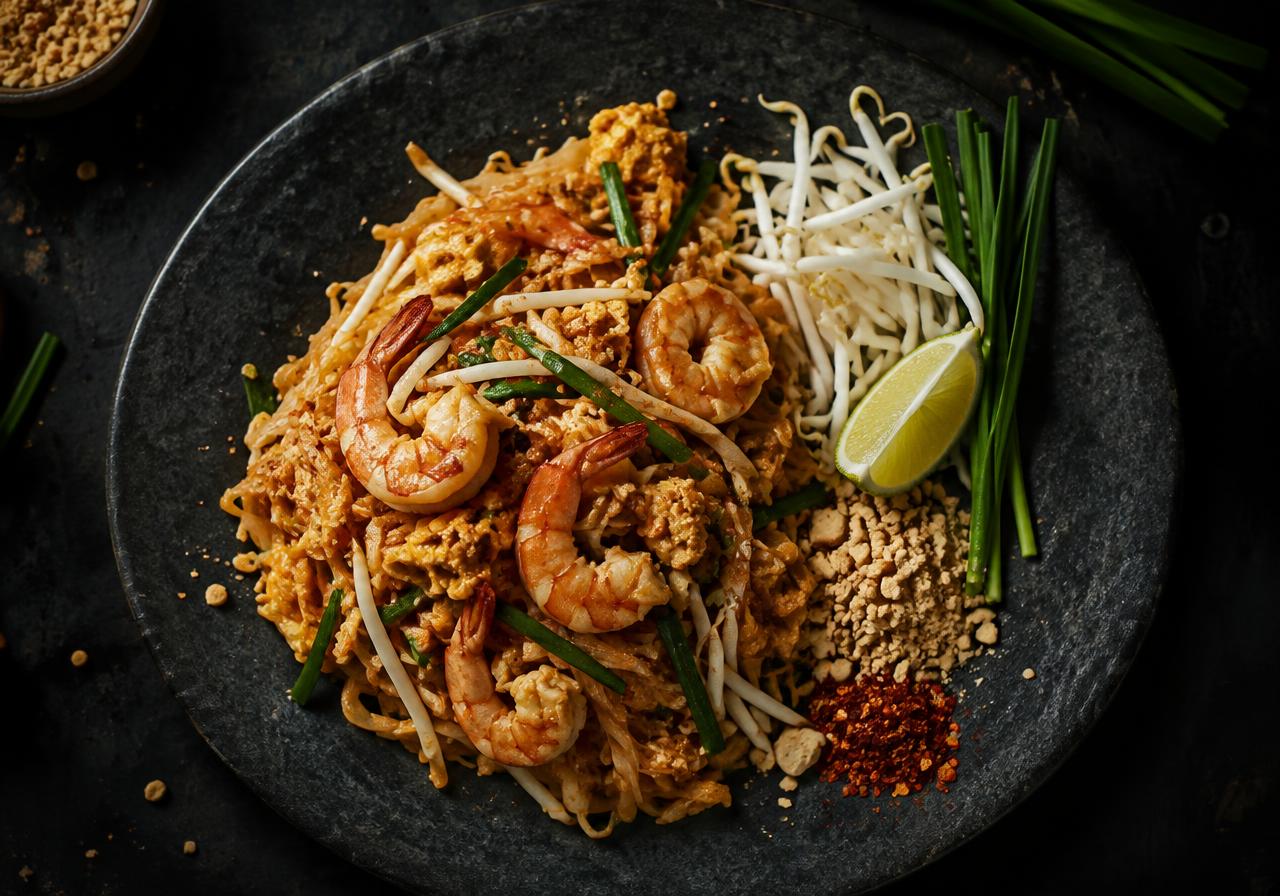
Learn the sequence behind a balanced plate of pad thai. This is an editorial recipe from the blog, not a recipe from Lexi's cookbook.
Editorial blog recipe
Editorial shrimp and tofu pad thai
Ingredients
- 150 g dried flat rice noodles
- 150 g peeled, deveined shrimp
- 100 g firm tofu, patted dry and cubed
- 2 large eggs
- 2 tablespoons neutral oil
- 3 tablespoons unsweetened, pourable tamarind cooking liquid, not undiluted concentrate
- 2 tablespoons fish sauce
- 2 tablespoons finely grated palm sugar or light brown sugar
- 2 tablespoons water, plus more as needed
- 100 g bean sprouts, rinsed
- 20 g garlic chives, cut into short lengths
- 2 tablespoons crushed roasted peanuts
- 1 lime, cut into wedges
- Dried chili flakes, optional
Instructions
- Soak noodles in room-temperature water for 30 to 45 minutes, or according to package instructions, until flexible but still firm. Drain.
- Mix tamarind, fish sauce, sugar, and 2 tablespoons water until the sugar dissolves. Taste and adjust for the strength of your tamarind.
- Heat oil in a wide skillet over medium-high heat. Brown tofu for 3 minutes. Add shrimp and cook for 2 to 3 minutes, until opaque and 145 F/63 C; transfer shrimp to a clean plate.
- Move tofu aside, add eggs, and scramble for about 1 minute until set. Add noodles and sauce. Toss for 3 to 5 minutes, adding water 1 tablespoon at a time until noodles are tender with a slight chew.
- Fold in sprouts and chives for 1 minute. Return cooked shrimp and heat through. Divide between plates and garnish with peanuts, lime, and optional chili.
Food safety: Cook shrimp to 145 F/63 C and eggs until set. Keep raw seafood separate from ready-to-eat garnishes. Refrigerate leftovers within 2 hours, or 1 hour above 90 F/32 C.
What makes pad thai distinctive
Pad thai combines rice noodles with a tangy, sweet, salty sauce, usually accompanied by contrasting textures rather than a thick coating. Tamarind supplies the characteristic sourness. Fish sauce contributes salt and savory depth, while palm sugar rounds out the sharper ingredients. Regional, restaurant, and household versions vary, so authenticity is better understood through ingredients and technique than through a single rigid formula. Ketchup is not necessary for this version, and the finished noodles should not swim in sauce.
Shop for noodles and tamarind
Choose flat dried rice noodles about 3 to 5 millimeters wide. Rice vermicelli and very broad fresh noodles behave differently and need different timing. Buy seedless tamarind pulp or prepared tamarind cooking liquid, checking whether the product is diluted or highly concentrated. The recipe measurements below assume a pourable, unsweetened cooking liquid. Very dark concentrate may be substantially stronger; dilute it according to its label and taste before measuring. Sweetened tamarind dipping sauce is not an equivalent ingredient.
Make the sauce first
Dissolve the sugar in the tamarind, fish sauce, and water before heating the wok. Taste a cooled drop: it should be assertive but not unpleasantly sour or overwhelmingly salty. Brands differ, so reserve a little sauce until you see how the noodles absorb it. Starting with less is easier than correcting a heavily seasoned pan.
Prepare everything before heating the pan
Soak the noodles in room-temperature water until flexible but still noticeably firm, usually 30 to 45 minutes; follow the package if it specifies a different method. Drain well. Cut the tofu, clean the shrimp, wash the sprouts, and portion the garnishes before cooking. The active cooking stage is short, leaving little time to search for ingredients. Use a wide skillet if you do not own a wok. Its broad surface is more useful than an overcrowded wok on a small burner.
Tip: Cook one serving at a time if your pan is small. Divide every component, including the sauce and eggs, before starting so the second batch receives the same balance.
Cook for springy noodles, not a soft mound
Brown the tofu and cook the shrimp first, then remove the shrimp so they do not toughen while the noodles finish. Scramble the eggs briefly before adding the drained noodles and sauce. Lift and turn rather than chopping repeatedly with a spatula. Add water a tablespoon at a time if the noodles remain hard after absorbing the sauce. Fold in sprouts and garlic chives near the end, allowing some crunch to remain. Return the shrimp only long enough to heat through.
A dry pan does not automatically mean the dish needs more oil. Often the noodles need a small splash of water and another minute to soften. Conversely, if liquid pools under tender noodles, stop adding sauce and let excess moisture evaporate briefly. Taste a strand before deciding whether the whole batch needs adjustment.
Serve and adapt thoughtfully
Offer lime wedges, roasted peanuts, and dried chili separately so each diner can adjust the plate. Garlic chives have a different aroma from scallions, although scallions are a workable alternative when shopping options are limited. Omit dried shrimp if unavailable rather than using an unrelated salty garnish. For a vegetarian adaptation, omit shrimp and use a vegetarian fish-sauce alternative, checking curry pastes and condiments for seafood as well. Explain substitutions honestly rather than promising identical flavor.
Pad thai is best immediately after cooking because rice noodles continue absorbing moisture. Refrigerate leftovers promptly in a shallow container and use within three to four days. Reheat until steaming hot throughout, adding a little water to loosen the noodles. Keep peanuts separate if serving someone with an allergy, and remember that fish sauce and shrimp present different allergen concerns.
Build your pantry before your next noodle night. →
Explore more approachable Thai recipes. →
Continue your Thai cooking journey
For another way to explore home cooking, consider Thai Kitchen Essentials: 27 Recipes from Lexy's Family Table by Lexi From Thailand. This digital cookbook is an option for readers who prefer a collected resource alongside individual blog articles. Review the available description and format information to decide whether it suits your kitchen and the way you like to learn.