Thai Dinner Recipes
Thai Basil Chicken Recipe - A Flavorful Thai Dinner
By Lexi From Thailand · 5 min read
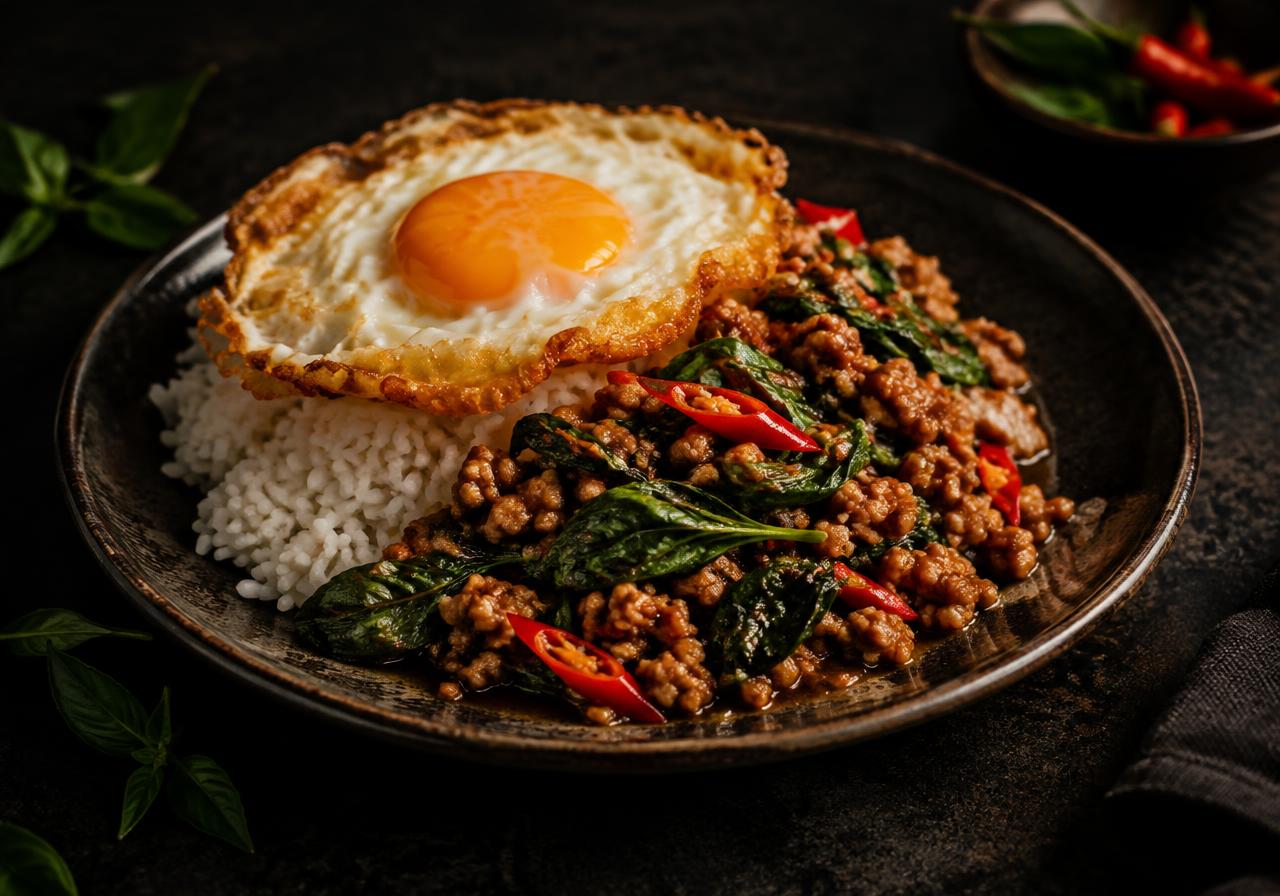
This editorial recipe from the blog, not from Lexi's cookbook, makes a small batch of pad kra pao with clear seasoning and heat adjustments.
Editorial blog recipe
Editorial pad kra pao with ground chicken
Ingredients
- 300 g ground chicken
- 2 tablespoons neutral oil
- 4 garlic cloves, finely chopped
- 1 to 3 Thai chilies, finely chopped, to taste
- 1 tablespoon oyster sauce
- 1 teaspoon fish sauce
- 1 teaspoon light soy sauce
- 1/2 teaspoon sugar
- 2 tablespoons water, plus more if needed
- 1 packed cup holy basil leaves, about 20 g
- Cooked jasmine rice, to serve
Instructions
- Mix oyster sauce, fish sauce, soy sauce, sugar, and water in a small bowl. Wash and dry basil.
- Heat oil in a wide skillet over medium-high heat. Stir-fry garlic and chilies for 20 to 30 seconds without burning.
- Add chicken and stir-fry for 5 to 7 minutes, breaking up clumps, until nearly cooked.
- Add sauce and simmer, stirring, for 1 to 2 minutes until the chicken reaches 165 F/74 C. Add a little water if the pan dries.
- Fold in holy basil for about 30 seconds, until wilted. Serve immediately with rice.
Food safety: Cook ground chicken to 165 F/74 C. Wash hands and utensils after contact with raw poultry. Refrigerate within 2 hours and reheat leftovers to 165 F/74 C.
Understand the basil in pad kra pao
Pad kra pao takes its name from holy basil, an herb with a peppery, clove-like character. Thai sweet basil has a more anise-like aroma and is not the same ingredient. If holy basil is unavailable, Thai sweet basil can make a tasty adaptation, but describe the substitution honestly. Ordinary sweet basil is another fallback with a different flavor. Add whichever basil you use near the end so its aroma stays noticeable rather than disappearing into a long cooking process.
Build a short, useful shopping list
Ground chicken keeps preparation simple, although finely chopped chicken offers a different texture and is also common in home cooking. Choose a product without added flavorings so the sauce remains predictable. Garlic and fresh chilies are the aromatic foundation. Bird's-eye chilies vary greatly in heat; start with one for a gentle introduction, avoid touching your eyes, and wash your hands and knife after chopping. Omitting chilies is possible when cooking for someone who does not tolerate heat.
Check the sauces
Oyster sauce adds body and sweetness, while fish sauce and light soy sauce contribute salt and savory flavor. Brands differ in concentration, so do not automatically add extra salt. Oyster sauce usually contains shellfish, and soy sauce commonly contains wheat. A mushroom-based sauce can replace oyster sauce, but a fully vegetarian dish also needs different protein and fish sauce.
Organize a fast cooking sequence
Measure the sauces into one small bowl, wash and dry the basil, and put cooked rice within reach. Wet herbs may splatter when they touch hot oil, so shake them dry thoroughly. Use a wide skillet or a wok that sits securely on your burner. You do not need restaurant-level heat; you need enough surface area to let chicken release moisture without stewing. Break up large clumps with your spatula as the meat cooks.
Tip: If doubling this recipe, cook the chicken in two batches and combine briefly at the end. A crowded pan can turn a quick stir-fry into a watery simmer, especially on a modest home burner.
Cook the aromatics without scorching them
Warm the oil over medium-high heat, then stir the garlic and chilies only until fragrant. Chopped garlic can move from golden to bitter quickly. Add the chicken promptly and spread it out before breaking it apart. Once the meat is mostly cooked, add the mixed sauces and a splash of water. Let the liquid bubble and coat the chicken rather than reducing it to a sticky, salty glaze. Check the temperature before adding basil and switching off the heat.
The finished dish should have enough moisture to season a spoonful of rice but not resemble soup. If the pan dries before the chicken is ready, add another tablespoon of water. If it looks wet after the meat is cooked, let it bubble briefly without a lid. Taste before adding any more fish sauce, particularly if you plan to serve salty condiments alongside.
Serve, vary, and store
Serve immediately over jasmine rice. A fried egg is a familiar accompaniment, but it is optional rather than a requirement. Cook eggs until the whites and yolks are firm for the lowest food-safety risk, or use pasteurized eggs if serving them less cooked to suitable diners. Cucumber slices offer a cool contrast without requiring another cooked dish. Keep additional chili sauce on the side so guests can control their own heat.
For a meat-free variation, crumble firm tofu, pat it dry, and brown it before adding suitable vegetarian sauces. The cooking time and moisture level will differ from chicken. Store leftover chicken and rice promptly in separate shallow containers when practical, and reheat portions until they reach 165 F/74 C. Add fresh basil after reheating if you have some available; its aroma will be brighter than herbs repeatedly warmed in the sauce.
Plan another quick Thai dinner. →
Learn which pantry sauces to buy. →
Continue your Thai cooking journey
For another way to explore home cooking, consider Thai Kitchen Essentials: 27 Recipes from Lexy's Family Table by Lexi From Thailand. This digital cookbook is an option for readers who prefer a collected resource alongside individual blog articles. Review the available description and format information to decide whether it suits your kitchen and the way you like to learn.