Thai Curry Recipes
Thai Curry vs. Indian Curry - What's the Difference?
By Lexi From Thailand · 5 min read
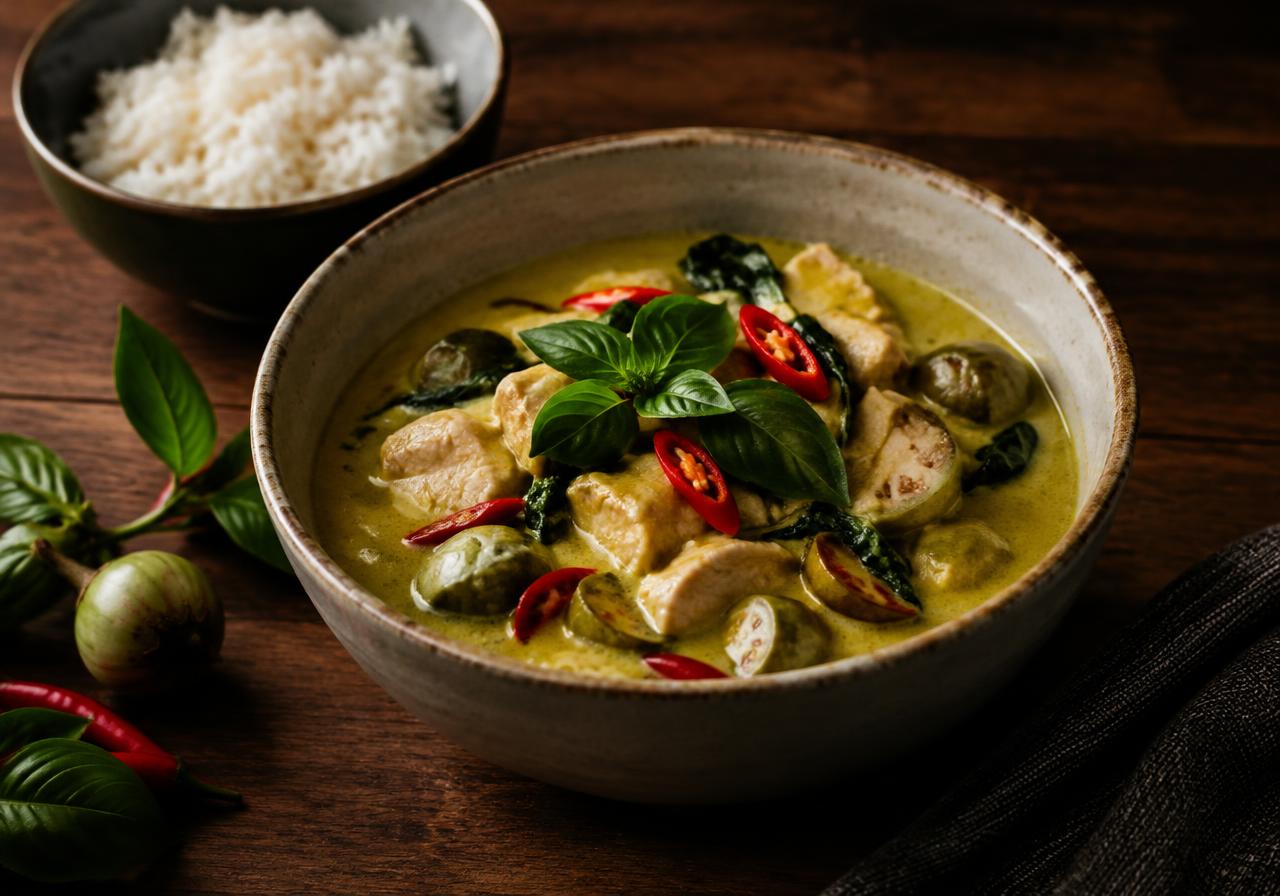
Thai and Indian curries can share ingredients while relying on different techniques. The useful comparison is between specific dishes, not two supposedly uniform cuisines.
Treat curry as a broad label
The English word curry covers many preparations rather than one recipe family with fixed rules. Both Thailand and India contain regional traditions and household variations that resist a simple chart. Some dishes have generous liquid, others are relatively dry, and not all fit neatly into restaurant categories. Comparing a Thai green curry with a particular Indian chicken curry can be useful, provided the comparison does not imply that those two dishes represent everything cooked in either country.
Compare aromatic foundations
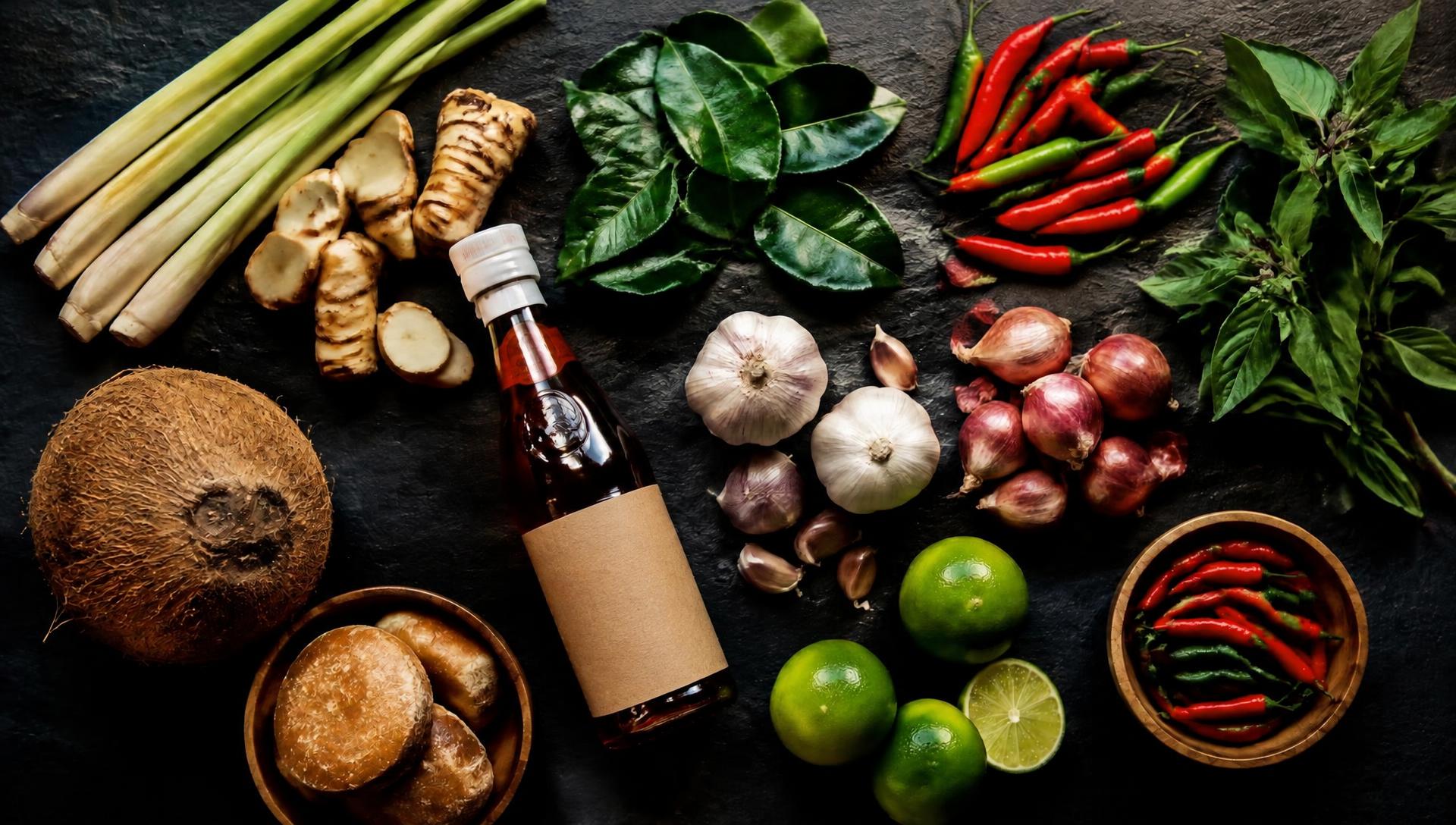
Many Thai curry pastes combine fresh aromatics such as lemongrass, galangal, makrut lime peel, garlic, shallots, and chilies, with ingredients varying by curry. Shrimp paste and dry spices may also appear. Pounding or processing creates a paste that can be fried or dissolved into liquid according to the dish. Fresh aromatics are important, but Thai curries are not uniformly free of dried spices; massaman is an obvious reminder that the picture is more complex.
Look beyond a single spice blend
Many Indian dishes build flavor from whole spices, ground spices, onions, ginger, garlic, and other ingredients in carefully sequenced stages. However, fresh herb pastes, coconut pastes, mustard, curry leaves, and many other foundations also appear across regional cooking. A jar labeled curry powder does not stand in for the breadth of these methods. The important lesson is to read the actual recipe rather than relying on a national shorthand.
Follow the fat and cooking sequence
A Thai coconut curry may begin by heating thick coconut cream until its oil separates, then frying the paste. Another method uses oil, particularly when working with stabilized canned coconut milk. Some Thai curries are water-based and follow a different sequence altogether. The cooking method supports the intended texture and aroma, so copying the ingredient list without understanding the sequence can produce a less coherent result.
Indian cooking may bloom whole spices in oil or ghee, cook onions to a chosen stage, and fry a ground masala before adding liquid. Other preparations use a tempering added later. These are examples, not universal requirements. Onion browning, spice timing, and water management can each matter as much as the quantity of an individual spice. Neither tradition can accurately be described as simply simmering everything together.
Avoid coconut and heat stereotypes
Coconut milk is common in several familiar Thai curries, but its absence does not make a Thai curry less legitimate. Coconut is also important in many Indian regional dishes, especially in some coastal and southern traditions. Yogurt, tomatoes, nuts, seeds, water, and other ingredients may shape sauces in different Indian preparations. Thick and creamy is therefore not a national boundary, and neither is the use of dairy or the absence of it.
Heat depends on the chilies, quantities, recipe, and cook. Green curry can be very hot, while some Thai dishes are gentle. Indian curries range widely as well. Color is an unreliable heat guide because fresh and dried chilies, turmeric, tomatoes, herbs, and other ingredients affect appearance. When using an unfamiliar paste or chili powder, start conservatively and taste after the mixture has cooked enough to assess safely.
Cook each dish on its own terms
Thai curries are often served with rice, including jasmine rice, but noodle-based dishes and other pairings also exist. Indian dishes may be paired with different regional rice preparations, breads, or other staples. Choose an accompaniment that makes sense for the particular dish instead of assuming all curries should be scooped with naan or that all Thai food requires the same rice. The way a meal is assembled influences how intense a sauce should taste.
Tip: If learning both traditions, cook one specific recipe from each and note the sequence of aromatics, fat, liquid, and finishing ingredients. That exercise is more useful than memorizing an absolute rule about national flavor.
Do not substitute a Thai curry paste directly for an Indian spice mixture and expect an equivalent result. You may create an enjoyable new dish, but it should be described as an adaptation. Check prepared products for salt and allergens, and give the original method enough attention to understand what your changes alter.
Practice with a chicken green curry. →
Explore the broader Thai food landscape. →
Continue your Thai cooking journey
For another way to explore home cooking, consider Thai Kitchen Essentials: 27 Recipes from Lexy's Family Table by Lexi From Thailand. This digital cookbook is an option for readers who prefer a collected resource alongside individual blog articles. Review the available description and format information to decide whether it suits your kitchen and the way you like to learn.