Thai Curry Recipes
How to Make Thai Green Curry at Home
By Lexi From Thailand · 5 min read
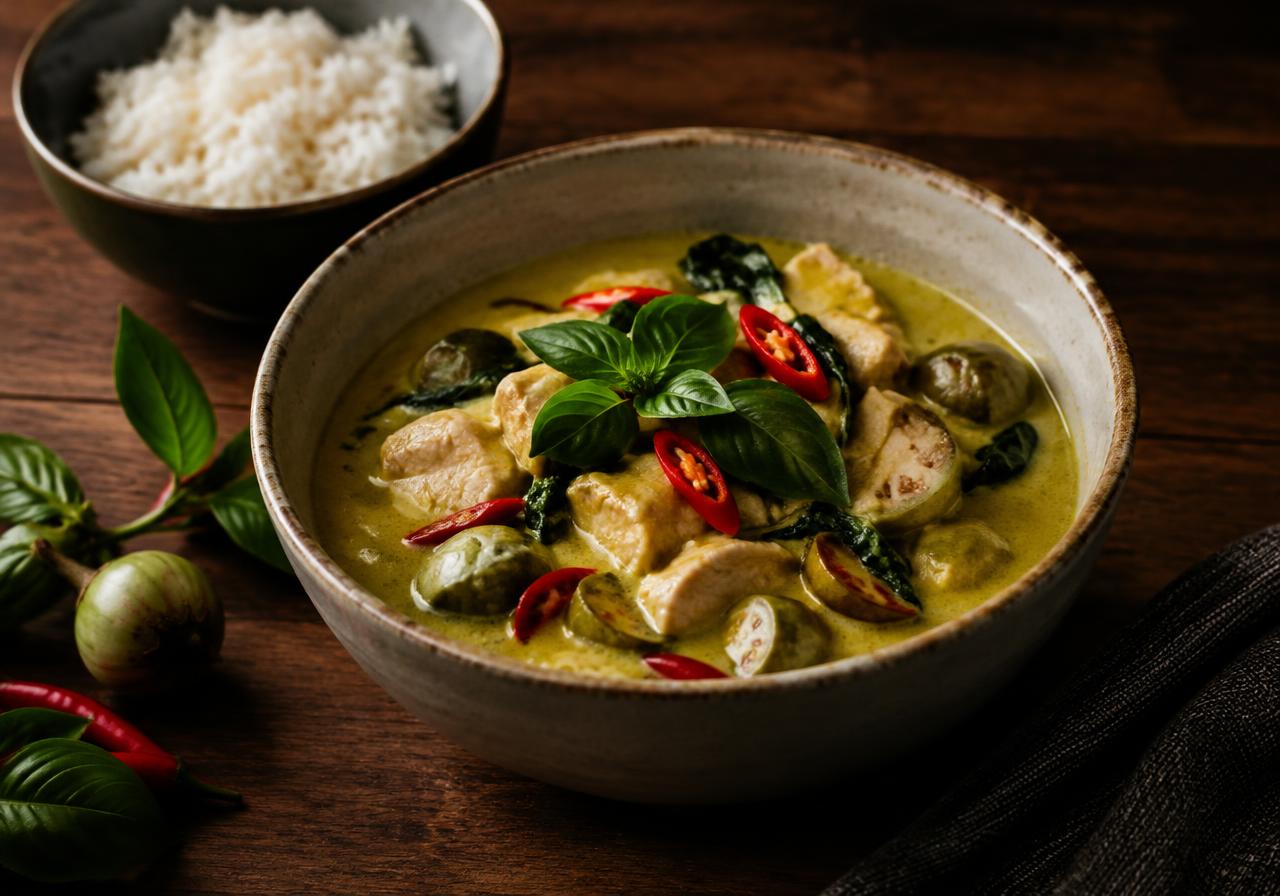
This editorial recipe from the blog, not from Lexi's cookbook, uses prepared curry paste to make a manageable chicken green curry.
Editorial blog recipe
Editorial chicken green curry
Ingredients
- 400 g boneless, skinless chicken thighs, cut into 2 cm pieces
- 1 tablespoon neutral oil
- 2 tablespoons Thai green curry paste, plus more to taste
- 400 ml unsweetened full-fat coconut milk
- 200 ml water or unsalted chicken stock
- 250 g eggplant, cut into 2 cm pieces
- 100 g green beans, trimmed and halved
- 3 makrut lime leaves, torn, optional
- 1 to 2 teaspoons fish sauce, to taste
- 1 teaspoon grated palm sugar or brown sugar
- 1/2 cup Thai sweet basil leaves
- Cooked jasmine rice, to serve
Instructions
- Prepare all vegetables and chicken using separate boards or washing thoroughly between tasks.
- Heat oil in a saucepan over medium heat. Stir curry paste for 1 minute until fragrant. Add 3 tablespoons coconut milk and stir for another minute.
- Gradually add remaining coconut milk and water. Add optional lime leaves and bring to a gentle simmer.
- Add chicken and eggplant. Simmer gently for 10 to 12 minutes, stirring occasionally. Add beans and simmer another 4 to 6 minutes, until vegetables are tender and chicken reaches 165 F/74 C.
- Taste before adding fish sauce and sugar. Stir in basil, remove large lime leaf pieces, and serve with rice.
Food safety: Cook chicken to 165 F/74 C. Check curry paste for shrimp allergens. Refrigerate leftovers within 2 hours and reheat to 165 F/74 C.
Start with the paste, not the color
Green curry gets much of its identity from a paste of green chilies and aromatics, not from adding green food coloring or a handful of unrelated leafy vegetables. Commercial pastes vary enormously in heat, salt, and ingredient balance. Some include shrimp paste, while others are labeled vegetarian. Read the ingredient list and use a modest quantity the first time you try a brand. A pale curry is not necessarily mild, and a bright green one is not automatically more authentic.
Choose coconut milk and vegetables
Use unsweetened canned coconut milk rather than a sweetened coconut drink or a thin refrigerated beverage. Full-fat milk gives the curry body without requiring starch. Shake the can for a uniform consistency if cooking with the oil-based method below. Some traditional methods heat thick coconut cream until its oil separates before frying the paste; stabilized canned products do not always separate readily, so forcing that process can be frustrating for beginners.
Match the vegetable to its timing
Small Thai eggplants have a distinctive texture and can take longer to soften than sliced supermarket eggplant. This recipe uses ordinary eggplant for accessibility. Cut it shortly before cooking and keep the pieces similar in size. Green beans provide contrast, but they should not go into the pot so early that they lose all their texture. Other vegetables are possible, with their cooking order adjusted accordingly.
Fry the paste gently
Heat a little neutral oil and stir the paste until fragrant before adding a small splash of coconut milk. Keep the heat moderate: a scorched paste makes the whole pot bitter. Gradually stir in the remaining milk and water, scraping the bottom to distribute the aromatics. The curry should reach a gentle simmer rather than a violent rolling boil. You are making a spoonable curry to eat with rice, not reducing a sauce until it becomes thick enough to stand up.
Tip: Taste a small spoonful after the paste has cooked into the liquid. Add more paste only if needed, first loosening it with hot curry liquid so it disperses evenly rather than leaving a concentrated lump.
Cook chicken thoroughly without drying it out
Boneless chicken thigh is forgiving in a simmered curry, though breast meat can also work with careful timing. Slice the chicken into similarly sized pieces and add it after the sauce is simmering. Add eggplant at roughly the same stage, then beans later. Keep a lid nearby if the vegetables need extra time, but check the pot so it does not boil aggressively. Use a thermometer to confirm that the chicken reaches 165 F/74 C in its thickest pieces.
Season near the end because the paste may already contribute substantial salt. Fish sauce adds depth, and a small amount of palm sugar rounds out bitterness and heat without making the curry taste like dessert. Thai sweet basil belongs at the finish. Makrut lime leaves provide a different aroma from lime juice; if you omit them, do not assume that adding lots of juice will reproduce their fragrance.
Serve a balanced bowl
Serve with plain jasmine rice, allowing the rice to absorb some sauce. Remove large torn makrut leaves before serving or explain that they are for aroma, not chewing. A simple cucumber side or lightly cooked greens is enough to complete dinner. Additional chili is easier to offer separately than to remove from a finished pot. If the curry is too intense, add a little more unsweetened coconut milk and then reassess seasoning rather than relying on sugar alone.
Cool leftovers promptly in shallow containers and refrigerate for up to three to four days. Reheat until the chicken and sauce reach 165 F/74 C, stirring so the center heats evenly. Coconut milk may separate after chilling; gentle stirring usually restores a pleasant consistency. Freeze portions if you will not eat them soon, recognizing that eggplant can become softer after thawing.
Compare Thai and Indian curry traditions. →
Find more beginner-friendly dishes. →
Continue your Thai cooking journey
For another way to explore home cooking, consider Thai Kitchen Essentials: 27 Recipes from Lexy's Family Table by Lexi From Thailand. This digital cookbook is an option for readers who prefer a collected resource alongside individual blog articles. Review the available description and format information to decide whether it suits your kitchen and the way you like to learn.