Thai Desserts
How to Make Mango Sticky Rice
By Lexi From Thailand · 5 min read
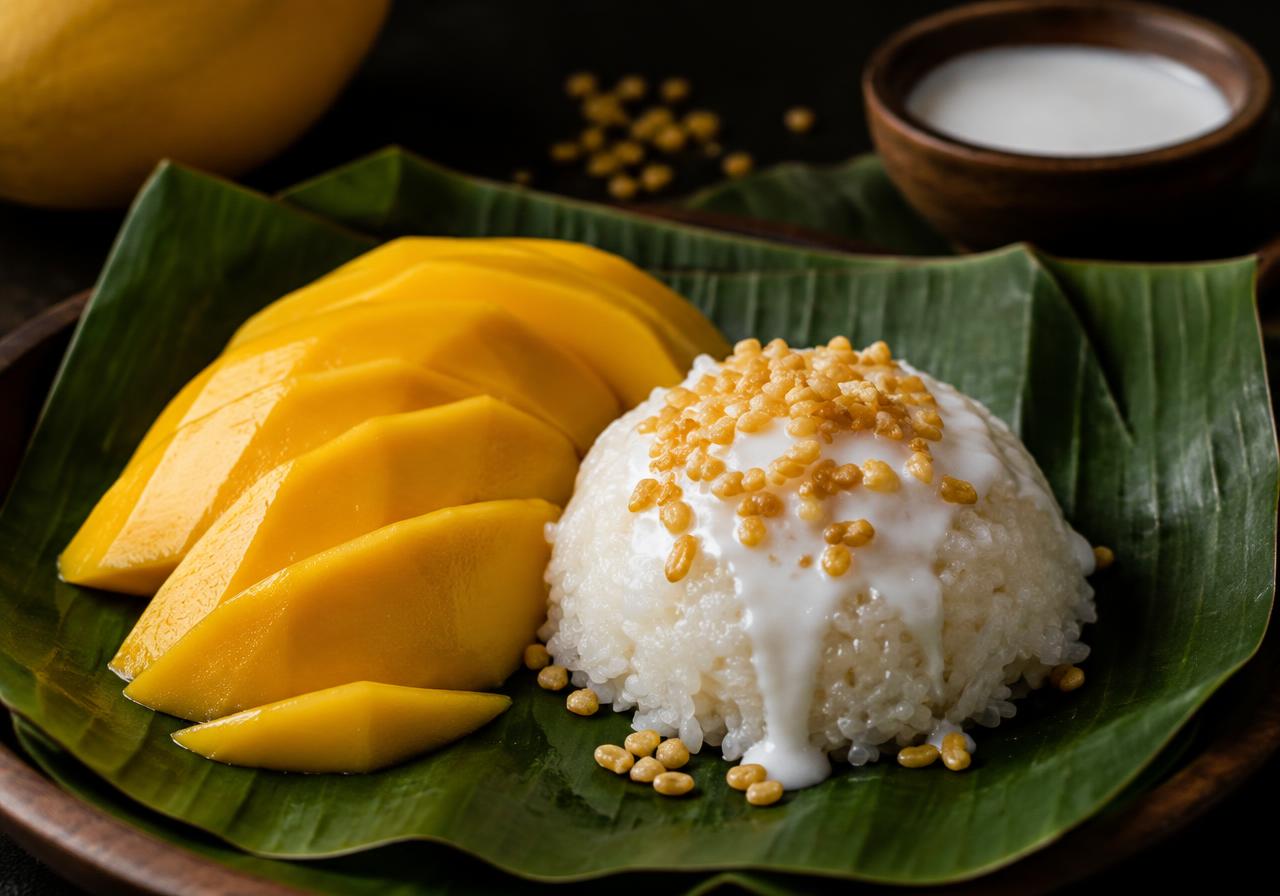
This editorial recipe from the blog, not from Lexi's cookbook, explains the soaking, steaming, and coconut absorption behind mango sticky rice.
Editorial blog recipe
Editorial mango sticky rice
Ingredients
- 200 g Thai glutinous rice, about 1 cup
- 300 ml unsweetened full-fat coconut milk, divided
- 60 g white sugar
- 1/4 teaspoon fine salt for the rice dressing
- 2 ripe mangoes
- 1 teaspoon rice flour
- 1 tablespoon cold water
- 1/8 teaspoon fine salt for the topping
Instructions
- Rinse rice several times. Soak in plenty of water for 4 hours or according to its package, refrigerating during soaking in a hot kitchen. Drain thoroughly.
- Line a steamer with clean damp muslin. Spread rice evenly above simmering water, cover, and steam for 25 to 35 minutes, turning once, until tender without a hard center. Keep water below the rice and replenish as needed.
- Warm 200 ml coconut milk with sugar and 1/4 teaspoon salt until dissolved. Transfer hot cooked rice to a bowl, fold in warm dressing, cover, and rest for 20 to 30 minutes.
- Mix rice flour with 1 tablespoon cold water. Warm the remaining 100 ml coconut milk with 1/8 teaspoon salt, stir in the slurry, and simmer gently for 1 to 2 minutes until lightly thickened.
- Peel and slice mangoes. Serve rice with mango and a spoonful of topping. The prep time includes a 4-hour soak and a 20-minute absorption rest; some rice needs longer soaking.
Food safety: Rice and coconut milk are perishable. Refrigerate within 2 hours of cooking, or within 1 hour above 90 F/32 C. Reheat rice to 165 F/74 C; do not use reheating to rescue rice stored unsafely.
Use the right rice
Mango sticky rice, often called khao niao mamuang, depends on glutinous rice rather than ordinary jasmine rice. Packages may call it sticky rice or sweet rice. Despite the English name, glutinous describes its sticky character and does not mean the rice itself contains gluten. Choose a long-grain Thai glutinous rice when possible. Substituting ordinary rice and simply adding more coconut milk produces a different texture, so it is worth finding the correct rice before planning the dessert.
Allow time for soaking and steaming
Rinse the rice in several changes of water to remove loose surface starch, then soak it for at least four hours, or according to the package. This waiting time is part of the preparation, even though it involves very little work. In a hot kitchen, soak in the refrigerator and allow extra time if needed. Drain thoroughly before steaming. The rice should sit above the water, not boil submerged in it.
Build a simple steamer
A bamboo sticky-rice basket works well, but a metal steamer lined with clean damp muslin or a suitable thin cloth can also work. Leave room for steam to circulate, and keep fabric clear of any flame. Use a stable lid and check the water level so the pot does not boil dry. Open the steamer away from your face to avoid burns from trapped steam.
Prepare a balanced coconut dressing
Use unsweetened full-fat coconut milk. Sweetened coconut drinks and cocktail-style cream of coconut are not direct substitutes. Warm part of the milk with sugar and salt only until the sugar dissolves; a hard boil is unnecessary. Salt matters because it gives contrast to the sweet rice and ripe fruit, but measure it rather than pouring freely. The dressing will initially look like more liquid than the steamed rice can absorb.
Tip: Combine the hot rice and warm coconut dressing promptly. Cover and rest before judging the texture. Rice that looks slightly loose at first often becomes tender and glossy as it absorbs the liquid.
Keep the topping separate
A small amount of lightly salted coconut sauce on top gives a different texture from the dressing absorbed into the rice. In this recipe, a little rice flour thickens the topping gently. Mix it with cold water first so it does not form lumps in the warm coconut milk. Simmer briefly while stirring, then remove from the heat. You want a spoonable sauce, not a firm pudding or a heavy layer hiding the fruit.
Taste the mango before deciding whether the dessert needs anything else. Fragrant, ripe fruit should yield slightly to gentle pressure without being mushy. Different mango varieties vary in sweetness, color, and fiber. Slice close to the flat pit, then peel and cut the flesh into pieces that can be eaten easily with a spoon. A less sweet mango may provide pleasant contrast, but very unripe fruit changes the character of the dish substantially.
Serve fresh and store carefully
Serve the coconut rice warm or at room temperature with freshly sliced mango and a little topping sauce. Do not hold the assembled dessert on a warm counter for hours. Rice and coconut milk are perishable, even though the dish contains sugar. If preparing ahead, keep the components separate and refrigerate promptly after the brief absorption rest. Chilled glutinous rice firms up, so warm it gently before serving if you prefer a softer texture.
Reheat only the rice portion you plan to eat, using a covered microwave-safe dish with a small splash of water and checking that it becomes steaming hot throughout. Add the fresh mango afterward rather than heating it with the rice. Store leftover rice and sauce in shallow covered containers, use within three to four days, and discard food that has spent too long at room temperature. Careful storage matters more than restoring the appearance with another splash of coconut milk.
Learn how Thai rice types differ. →
Explore dishes beyond dessert. →
Continue your Thai cooking journey
For another way to explore home cooking, consider Thai Kitchen Essentials: 27 Recipes from Lexy's Family Table by Lexi From Thailand. This digital cookbook is an option for readers who prefer a collected resource alongside individual blog articles. Review the available description and format information to decide whether it suits your kitchen and the way you like to learn.