Easy Thai Recipes
Thai Fried Rice Recipe and Cooking Tips
By Lexi From Thailand · 5 min read
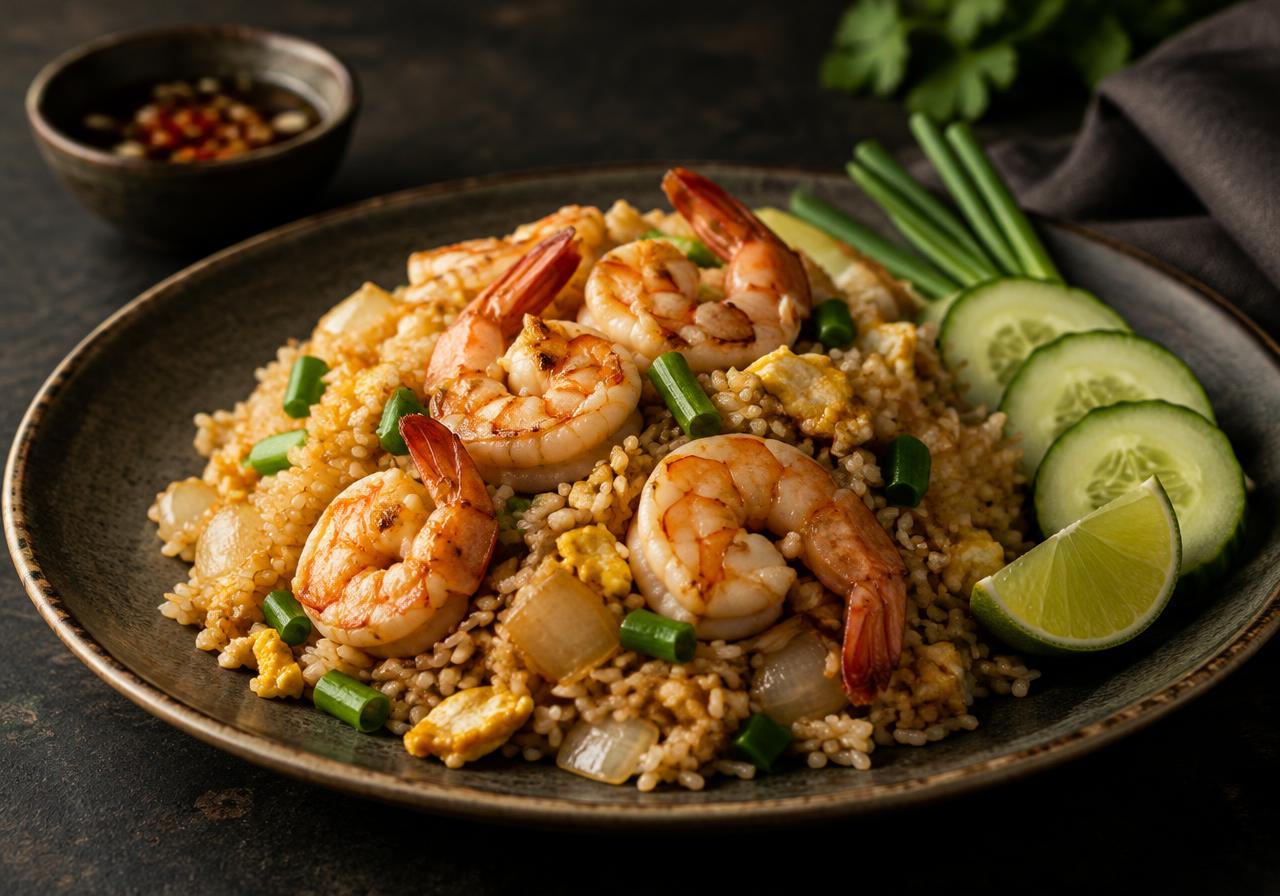
This editorial recipe from the blog, not from Lexi's cookbook, focuses on a simple egg fried rice with well-separated grains.
Editorial blog recipe
Editorial Thai-style egg fried rice
Ingredients
- 3 cups cooked jasmine rice, about 450 g, promptly chilled and refrigerated
- 2 tablespoons neutral oil
- 1/2 small onion, finely diced
- 1 small carrot, about 60 g, finely diced
- 2 garlic cloves, minced
- 2 large eggs, beaten
- 2 teaspoons fish sauce
- 1 teaspoon light soy sauce
- 1/2 teaspoon sugar
- 2 scallions, sliced
- 1 lime, cut into wedges
- 1/2 cucumber, sliced, to serve
Instructions
- Break chilled rice into loose grains with clean hands or a spoon. Mix fish sauce, soy sauce, and sugar.
- Heat oil in a wide skillet over medium-high heat. Stir-fry onion and carrot for 3 to 4 minutes. Add garlic and stir for 20 seconds.
- Push vegetables aside, add eggs, and scramble for about 1 minute until set.
- Add rice and stir-fry for 4 to 6 minutes, breaking up clumps and allowing grains contact with the pan. Add sauce and toss for another minute, until hot throughout and at least 165 F/74 C.
- Fold in scallions. Serve immediately with lime wedges and cucumber.
Food safety: Use only safely chilled rice. Refrigerate cooked rice promptly within 2 hours, or 1 hour above 90 F/32 C. Reheat to 165 F/74 C; reheating cannot make improperly stored rice safe.
Start with rice that suits the pan
Thai fried rice, often called khao pad, works well with jasmine rice whose grains have firmed after cooking and chilling. Freshly cooked rice contains surface moisture that can make a crowded pan sticky, although carefully managed fresh rice can work. For this beginner version, use refrigerated rice and break up large clumps before heating the skillet. Do not interpret the preference for chilled rice as advice to leave cooked rice sitting at room temperature for hours.
Cool and store rice safely
Cooked rice can support the growth of Bacillus cereus if handled poorly. Cooking does not reliably destroy all spores, and some toxins formed during unsafe storage are not removed by ordinary reheating. Spread rice in a shallow container and refrigerate promptly, rather than waiting for a deep pot to reach room temperature. Keep it at 40 F/4 C or below and use within three to four days, or follow stricter local guidance. Freeze portions when you need longer storage.
Check what is already seasoned
Plain rice gives you the clearest control. Rice left from a heavily seasoned dish will bring its original sauce into the pan. If you use cooked meat, make sure it was stored safely and plan to reheat it thoroughly. This recipe uses eggs rather than raw meat so beginners can focus on rice texture without managing several different doneness targets.
Prepare a restrained set of additions
Cut onion and carrot small enough to cook quickly, and slice scallions separately so you can add them late. Too many vegetables release water and shift the dish toward steamed rice. Measure fish sauce, light soy sauce, and sugar before starting. These quantities are deliberately modest: diners can add lime and suitable condiments at the table. Dark soy sauce is not required for a deeply brown appearance, and extra sauce cannot compensate for a pan that is too crowded.
Tip: Use the widest skillet you have and cook in batches if necessary. Keep a plate nearby to hold cooked components rather than forcing everything into a small pan at once.
Use the pan in stages
Heat the oil, briefly soften the onion and carrot, and stir in garlic without letting it burn. Move the vegetables aside or remove them momentarily before scrambling the eggs. Once the eggs are set, add the rice and use a lifting, pressing motion to separate clumps. Pour the measured seasoning over the rice and toss so it distributes evenly. Give the grains time against the hot surface instead of stirring so frantically that they never warm through.
If the rice sticks, check whether it needs a small amount of oil or simply another moment before lifting. Avoid pouring in water to solve every problem, because added moisture can undo the texture you are trying to achieve. A little browning is welcome, but scorched garlic and smoking oil are not goals. Home equipment can make excellent fried rice without replicating the heat of a restaurant wok station.
Finish brightly and adjust with care
Fold scallions in near the end, taste a small spoonful, and stop seasoning once the rice is pleasantly savory. Serve with lime wedges and cucumber for contrast. Chili in fish sauce is a familiar table condiment, but keep it optional and remember it adds salt as well as heat. A squeeze of lime on the plate tastes fresher than simmering lime juice into the pan for several minutes.
For a vegetarian version, replace fish sauce with a suitable vegetarian alternative and check that every other condiment meets your needs. To add chicken or shrimp, cook it separately to a safe temperature before combining, keeping the total pan load manageable. Refrigerate any finished leftovers promptly, and reheat only the portion you need until it reaches 165 F/74 C throughout. Rice that spent too long warm should be discarded rather than rescued with extra frying.
Plan dinners around safely stored rice. →
Understand essential Thai pantry ingredients. →
Continue your Thai cooking journey
For another way to explore home cooking, consider Thai Kitchen Essentials: 27 Recipes from Lexy's Family Table by Lexi From Thailand. This digital cookbook is an option for readers who prefer a collected resource alongside individual blog articles. Review the available description and format information to decide whether it suits your kitchen and the way you like to learn.